

How to Write Your Own Wedding Vows

Read on for expert tips from three of Cleveland’s top wedding officiants!
Your vows are the heart of your ceremony. With the right guidance, writing them yourself can be one of the most meaningful things you share on your wedding day.
Start with "why" before you start with "what"
Your wedding ceremony is one of the most significant moments of your life, and your vows are the centerpiece of it all. More and more couples are choosing to ditch the script and write something entirely their own — and for good reason.
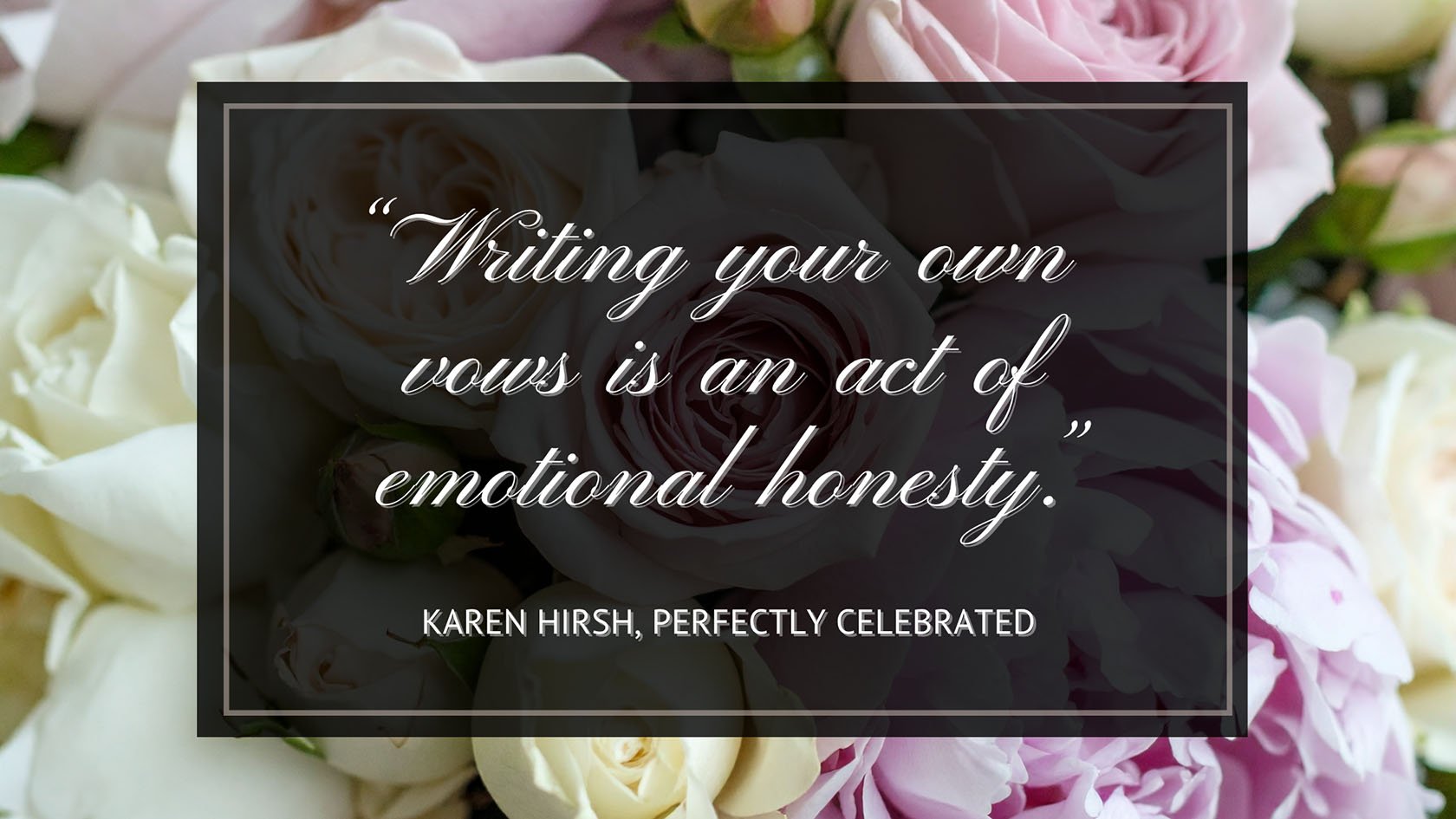
As Cleveland-area officiant Karen Hirsh of Perfectly Celebrated puts it, "Couples don't want a cookie-cutter wedding anymore. They want something that feels like their own. Writing personal vows gives them a chance to say exactly what they feel, in their own voice, rather than repeating traditional lines that may not reflect their story."
Fellow officiant Heidi Shenkle of Exclusively Yours, who has been marrying couples for over 17 years, agrees. "Couples want their ceremony to feel unique and authentic," she says. "Hearing those heartfelt words from their partner makes the ceremony even more meaningful and unforgettable — not only to them, but to their family and friends."
Writing your own vows is an act of love, and with the right approach, it doesn't have to feel overwhelming.
Here's everything you need to know to write vows that are personal, powerful, and perfectly you.
Give yourself plenty of time to reflect
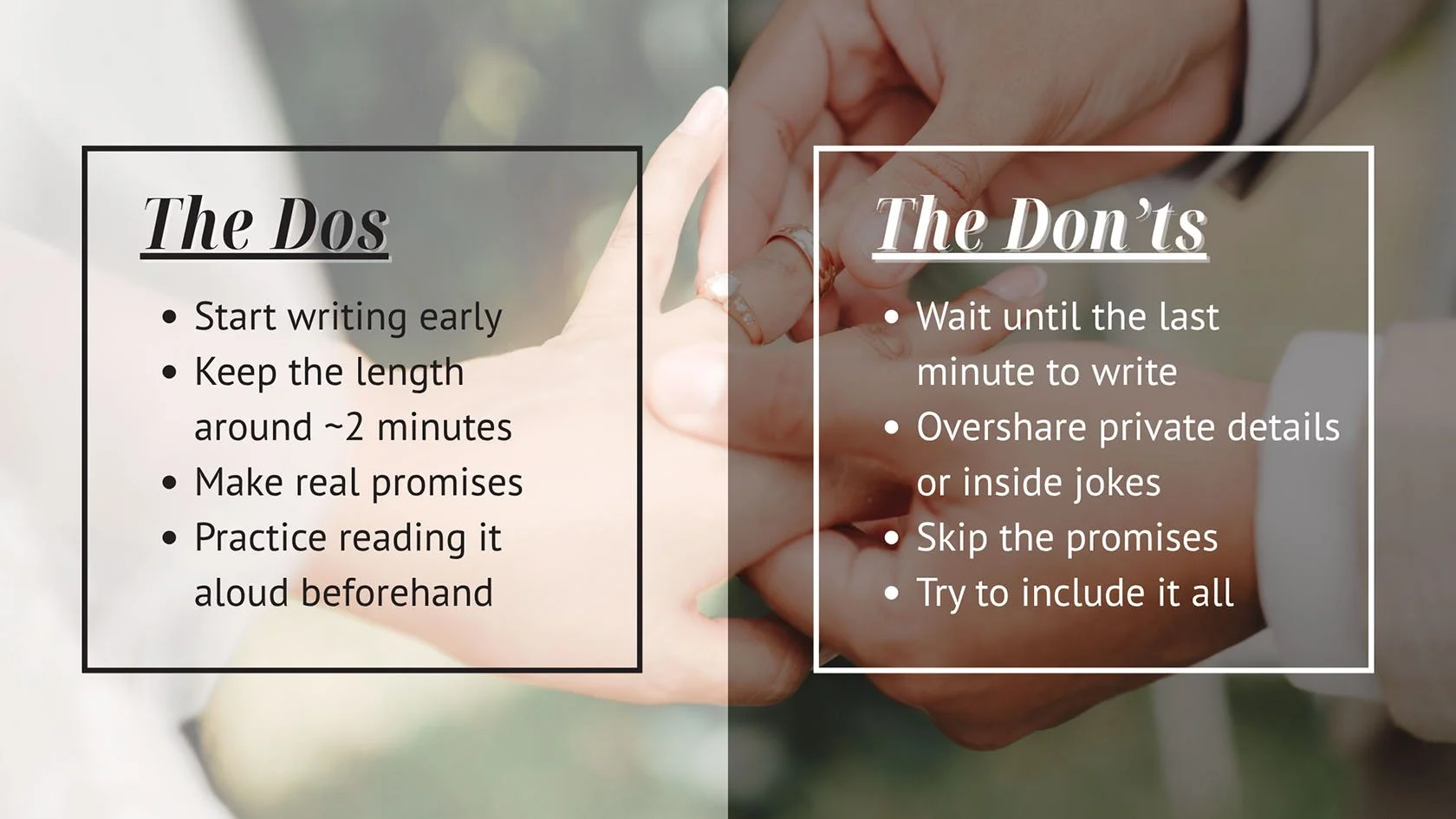
One of the most important things every officiant agrees on: don't wait until the week before your wedding to start writing.
Heidi reminds her couples that "writing vows takes more thought than most people expect," and Karen echoes the same advice: don't wait until the last minute.
Set aside dedicated time to sit quietly and reflect on your relationship. Think about your first impression of your partner, the moments that changed you, and the specific reasons you chose them.
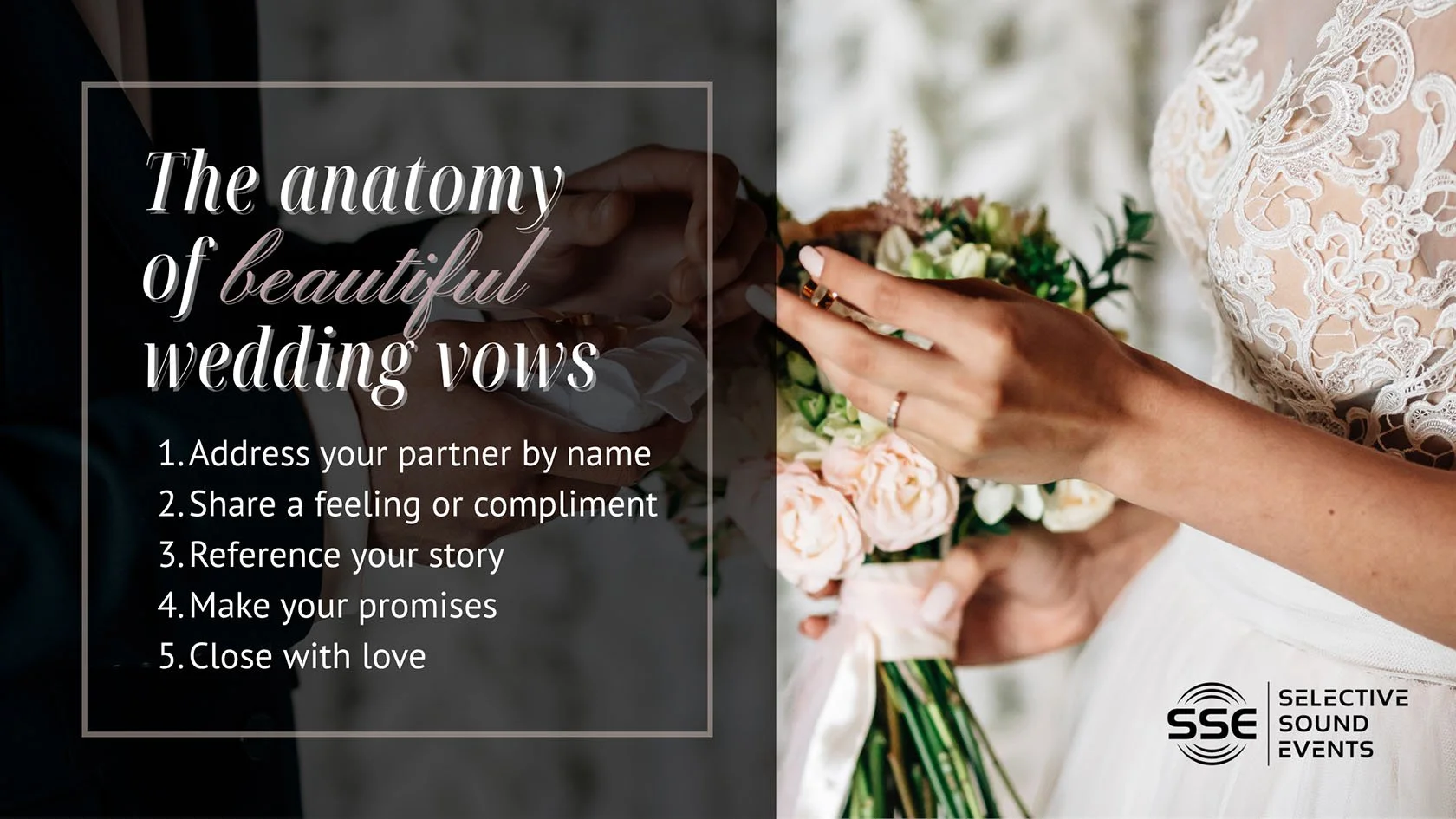
Megan Tellalian of Married by Megan (who has officiated over 900 weddings!) suggests a simple but effective structure: start with a few sentences about your first impression, share how your partner has changed your life, then move into your promises, and wrap up with what you're looking forward to most in your future together.
And don't forget to say "I love you" at the end! It's a simple detail that makes a bigger impact than you might think.
Keep your vows focused on promises, not just feelings
Here's something every professional officiant has noticed: couples often pour beautiful, heartfelt emotion into their vows but forget the actual promises.
Megan has reviewed hundreds of vows and finds this to be one of the most common missteps: "They send me these lovely things about how they feel about their soon-to-be spouse," she says, "but they fail to make promises."
Vows are, at their core, a commitment, so make sure you're actually committing to something.
Think about a few meaningful promises you want to make: to be faithful, to show up when things get hard, to keep choosing each other, to keep learning and growing together. Then put those promises into your own words, in your own voice. That's where the magic happens.
Karen also recommends a clear structure to guide your writing: address your partner by name, share a compliment and how you feel, talk about when you first met, communicate your intentions, make your promises, and close with something that feels like you.
Aim for about two minutes — it's more than enough
When it comes to length, all three officiants land in the same place: aim for one to two minutes per person.
That may sound short, but as Megan Tellalian says, "You can say A LOT in two minutes!" Two minutes is long enough to be deeply personal and moving, but short enough to hold your guests' attention and keep the ceremony flowing beautifully.
Heidi suggests that couples coordinate with each other on length before they start writing — not to share the actual words, but simply to agree on a rough timeframe. That way, one partner doesn't end up with a two-minute masterpiece while the other delivers a ten-minute epic.
Reading your vows out loud before the wedding day is a must. It helps you hear how they flow, catch anything that feels off, and make sure you're comfortable with the timing.
Think carefully about what to leave out
What not to include is just as important as what you do include.
Heidi cautions couples not to overshare private details or lean too heavily on jokes.
"This part of the ceremony is about your commitment to each other, your promises, and the heart of your ceremony," she says.
A lighthearted moment here or there is absolutely welcome — in fact, it can be memorable and beautiful — but your vows should ultimately be grounded in genuine emotion and sincere commitment.
Karen adds a few more things to avoid: don't make your vows cryptic or inside-joke-heavy to the point that guests feel left out, and don't try to include everything. Edit with love and intention.
Decide how you'll deliver your vows on the day
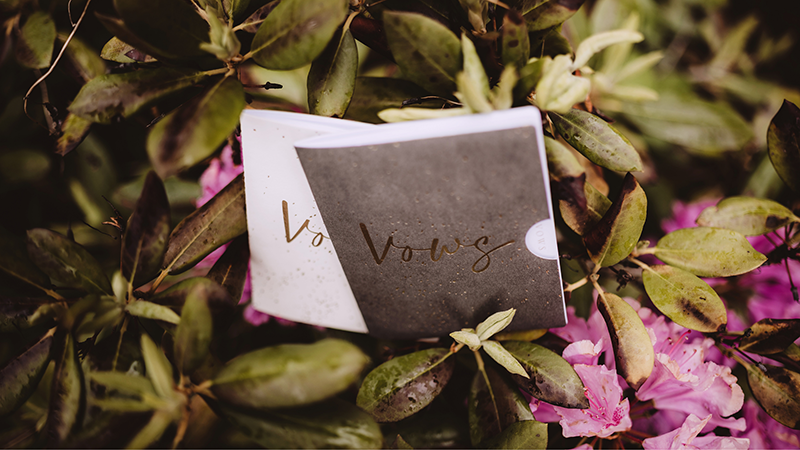
Once you've written your vows, you need a plan for how you'll actually deliver them. Should you memorize them? Type them? Write them in a vow book?
All three officiants strongly recommend against trying to memorize your vows entirely, as the emotional intensity of the moment makes it far too easy to blank.
Instead, have something in hand. Megan offers to print vows on cardstock in 18-point font so they're easy to read without fumbling. She also points out a practical note about vow books: your own handwriting can be difficult to read under pressure, and flipping pages makes it harder to hold your partner's hands.
Karen creates personalized vow books for her couples, keeps them safely in her officiating binder, and hands them over at just the right moment, which also means no one has to worry about forgetting them at home on the big day.
Heidi offers a similar option: couples can email their vows to her separately (so neither partner sees the other's words ahead of time), and she'll have printed copies ready. "Not only does this remove some stress," she says, "but it also looks beautiful in photos."
The bottom line: whatever format you choose, have a backup copy ready.
Make sure every guest can hear every word
Here's something that often gets overlooked in the excitement of planning: the audio.
Your vows can be the most beautifully written words in the world, but if the guests in the back row can't hear them, the moment falls flat. That's why working with an experienced sound and entertainment team, like Selective Sound Events, is so essential.
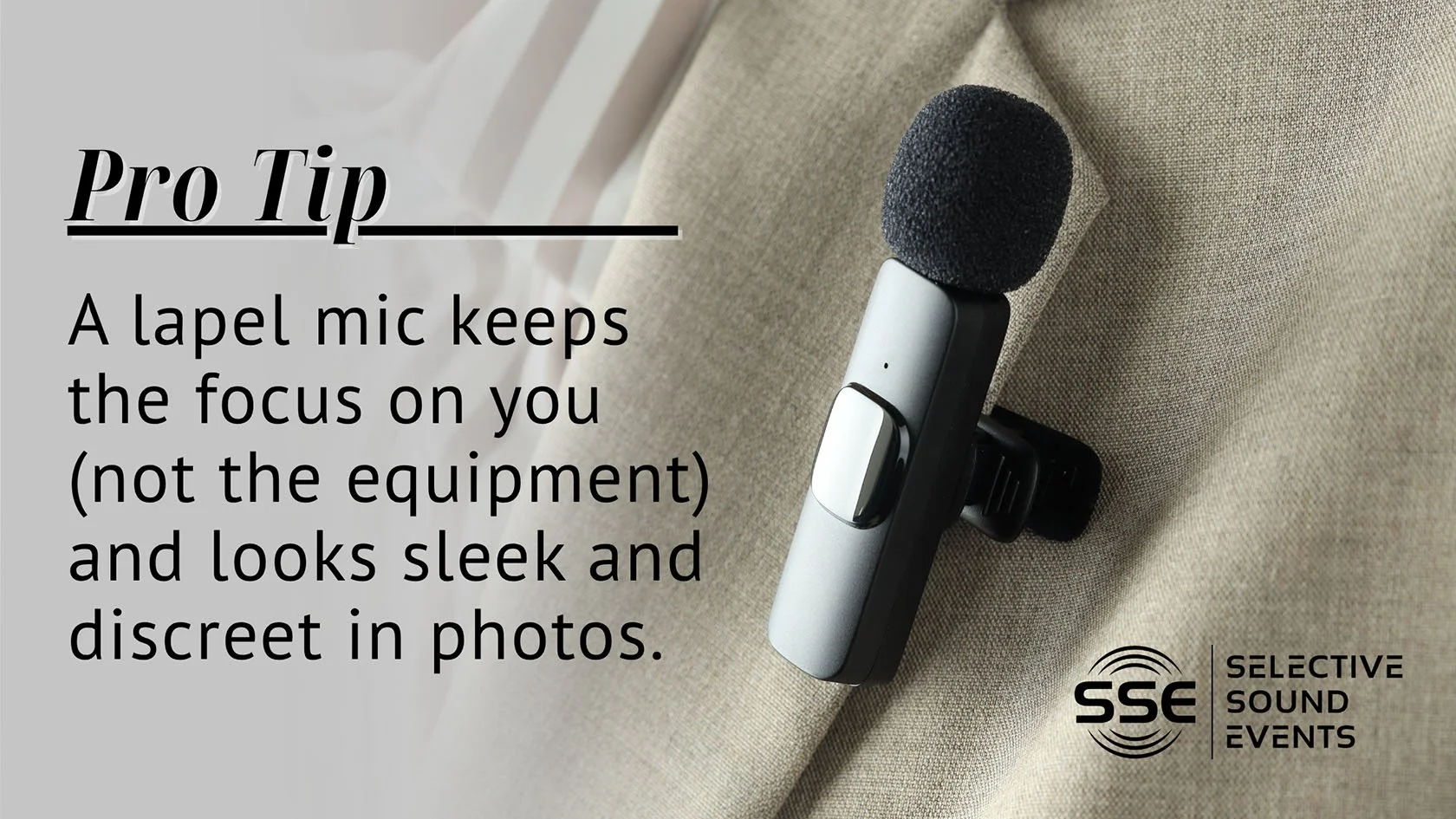
All three officiants agree that lapel microphones are the gold standard for ceremony audio. They keep the officiant's hands free, stay out of photos, and allow everyone to move naturally.
And if your officiant is juggling a binder, vow books, and rings at once, a handheld mic won't work!
Megan shares that working with SSE's Jay R makes a real difference.
"Being able to use a lapel mic makes my job so much easier and helps give the couple a flawless ceremony. I know that when I hear Jay R is the DJ, I will have a significantly easier experience."
“SSE is a top-notch company with state-of-the-art equipment,” says Karen. “A great DJ company is crucial for a smooth, polished, and enjoyable experience for everyone involved. I never have to ask about feedback, volume, or equipment, because [SSE] gets it. Everyone hears every word. Even the guests in the back row. When a DJ company brings that level of care, it helps me do my job better and elevates the whole event for everyone.”
At SSE, we believe the ceremony deserves the same level of audio excellence as the reception. From proper mic placement to speaker positioning that ensures every guest can hear your vows clearly, we bring the expertise and equipment to make it happen seamlessly.
Let your vows tell your story
At the end of the day, the best wedding vows are the ones that sound like you.
Karen witnessed this beautifully at a ceremony at Georgetown/Vosh in Lakewood. The groom opened with a playful promise about sharing his french fries that drew laughter from the crowd, then followed it with something deeply sincere: a promise to keep learning how to love his partner through every version of her as she grows (where are the tissues?!).
The bride matched him with specific, tender memories, including how he drove three hours to bring her soup when she was sick, and she promised to choose their relationship every single day, even when life is messy.
"What stuck with me was how 'seen' they made each other feel," Karen recalls. "You could tell they weren't just making promises. They were honoring the journey they'd already shared and committing to the road ahead."
That's what personalized vows can do. They don't just mark a moment. They become a significant moment in and of themselves.
Start early, write from the heart, make real promises, and trust the process. Your people will remember what you said long after the cake is gone.
Ready to start planning a ceremony that sounds and feels incredible from the first note to the final kiss? We’re here to make every moment — and every word — unforgettable.